Showing posts with label whole foods - breakfast. Show all posts

Friday, 25 August 2017

Whole Grain Crackers

Whole grain crackers are oh so yummy and to spice up the flavours with toasted spices, herbs or seeds makes for a real impressive snack for the peckish.


Blog recipes for

Whole Grain Crackers


Basic recipe
2 cups buckwheat flour
1/4 cup olive oil
2 teaspoon pink himalayan salt
2 teaspoon cracked black pepper
1/4 -1/3 cup cold water


Place all ingredients in a food processor except the water, blend and slowly add the water until the mixture forms small soft crumbs.

Mould these crumbs together to make a dough in your hands before transferring the mixture onto a well dusted with buckwheat flour bench space.

Roll out the mixture with a rolling pin to create 0.5 cm thickness dough.

With a shape cutter or the top of a jam jar, cut the shapes and place these on a baking try lined with baking paper.

 Cook at 160 degrees for approx. 10 minutes, until crispy.

 Keep your eyes on these to ensure they do not burn

 NOTE: they will further crisp when left to cool down.


Reveal your inner herbalist, try something creative.
Do any of these herb combination spark your fancy

Herb & spice mixtures:
In a skillet or heavy pan/pot gently heat spices to activate

1. Rosemary, garlic granules, thyme
2. coriander seeds, cumin seeds & turmeric  
3. caraway seeds & curry powder
4. black pepper, paprika & coriander seeds
Add in toasted nuts or seeds 1/4 cup
sesame seeds, sunflower seeds, pumpkin seeds,
pistachios or almonds finely chopped.

Thursday, 3 November 2016

Smoothies & Smoothie Bowls

- Whole Foods - Gluten Free - Dairy Free -
-Antioxidant boosting - Vitality - Nutrient dense -
-Cleanse & detox - Immune system boost -
- Liver cleanse - Digestion rest & repair -
- Dessert for breakfast - Creativity - Beauty -


Smoothie: 

Create your smoothie by using the following guide.
Choose one or two from each dimension.


Smoothie Bowl: 


Create your smoothie bowl by choosing from the guide.
Smoothie bowls have a slightly thicker consistency
so use less liquid and one or two options from the creamy dimension.
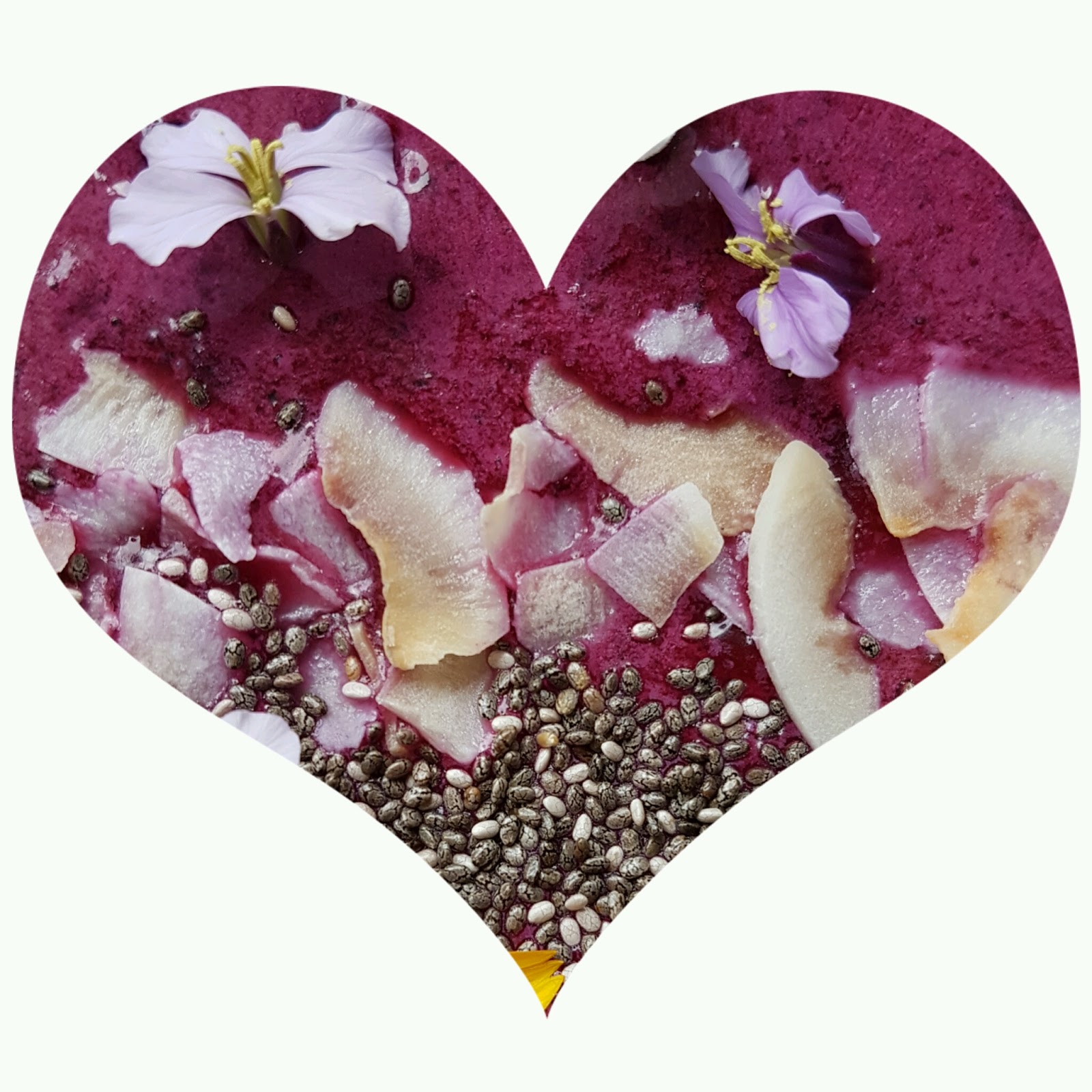
Pour the smoothie in a bowl and decorate with toasted coconut flakes, nuts/and seeds like chia seeds or buckinis, edible flowers, granola or muesli, cacao nibs, fresh brightly coloured fruit or raw chocolate.


TIPS:
 Add an acidic note like apple cider vinegar, berries, kiwi fruit,
or freshly squeezed lemon juice can balance the richness of the smoothie.

Simple is best - you can over do it.

 Good way to pack in your greens for the day.
Be creative, your body loves change.


Your Guide to Smoothies & Smoothie Bowls


Creamy texture:
1/2 - 1 frozen banana
1/4 cup tofu, organic only (try tonzu tofu)
1/2 avocado
1/2 cup soaked cashews, walnuts or almonds
1/4 cup coconut cream, coconut yoghurt, organic tofu yoghurt or natural yoghurt.
3 tablespoons of nut or seed butter - cashew, almond, brazil, hulled tahini

Liquid:
filtered water
almond milk or home made alternative nut/seed milk (please subscribe)
coconut water
brewed tea left to cool - herbal tea like green tea, detox tea, ginger or lemon balm

Fruit:
berries - blueberries, raspberries, blackcurrants, strawberries (organic) 
pineapple
kiwifruit
frozen banana
1/2 green apple
1/2 green pear


Superfoods - nutrient dense & medicinal use foods.


(for the truth all wholefoods have superpowers, because Mother Nature designed them this way!)

spirulina or chlorella
essential minerals & trace elements

walnuts
 soaked over night in water: anti cancer, essential trace minerals & omegas


maca powder   
for stamina, PMS, balancing hormones & libido, elevates mood

cashews
 powerful for mood stabiliser and elevator, helps progesterone hormone production

chia seeds
essential nutrients and omegas, powerful at cleaning digestion system & relieving constipation when left to soak in a fluid for 5 minutes until the 'goo' is released from the seed.

cacao  
 in large quantities or daily use can act as a neurotoxin, small amounts 1/2 - 1 small teaspoon high in antioxidants & heavy body detoxifier

cinnamon
 stabilises blood sugars, anti inflammatory, gut bacteria support, healthy metabolism

goji berries  
(not for sensitive digestion systems or people with inflammation)
-antioxidant rich

berries
blueberries, raspberries, strawberries, boysenberries
   anti-cancer, antioxidant (source strawberries organic - heavy spraying)

handful of kale, cos lettuce or spinach
 essential nutrients & minerals, (source organic - heavy spraying)

small stick of celery   
 anti-cancer, anti-inflammatory, diuretic

beetroot slices  
 antioxidant, anti-cancer, liver detox, blood cleaner

naturally iodised salt
 essential for your thyroid which controls metabolism, hormones & bodies major energy centre
 essential trace minerals

brazil nuts - selenium
(2-3 nuts will give you the dose of selenium for the day)
 essential for your thyroid which controls metabolism, hormones & bodies major energy centre, used to make antioxidants in the body, help the liver to function & detox
essential for elevated cholesterol

grated ginger   
 calming of nervous system & digestion, warming food

turmeric  
 anti-inflammatory, anti-cancer, antioxidant, vitality

honey    (do not ever heat honey, changes the honey unfavourably)
 raw & unprocessed only, stabilise gut flora, anti-bacteria, fungi, viral

apple cider vinegar
 helps with gout, arthritis, gut bacteria balance, increase alkalinity, aid digestion, anti parasite, anti fungal, anti bacteria, detox & blood cleaner

lemon juice
anticancer, very alkaline, digestion aid & balance

 coconut oil (small amounts <1 teaspoon day)
 cold pressed only, anti cancer, anti bacteria, anti viral, anti fungal, aid digestion, aid body condition including skin & hair, good source of fat


Plant based protein breakfast

- Whole foods - Plant based protein - essential nutrients - 
- Proteins are the building blocks of life -

Proteins are the building blocks, the foundations of your body. It is essential to a healthy body to have a balance of protein sources on a plant based diet.
Some plants are complete protein meaning they have all 9 essential amino acids and others are missing some of these amino acids.
Your body stores these amino acids throughout the day so it is important that you eat a wide range of foods to create the proteins your body needs.


Awareness:
 
Please read this article on protein if you are on a plant based diet.


Build a Protein Bowl


grains -

1 cup of cooked quinoa* (6.4g, complete protein)
1 cup of cooked buckwheat* (22g, complete protein)


(* see quinoa porridge for quinoa cooking directions, 
soak the quinoa & buckwheat separately and then wash and rinse thoroughly)

Cook these together in the same saucepan. 
Add in salt & cracked black pepper before the cooking process.


TIP: before you put the lid on a begin the cooking process of the grains you can add in flavour, try 1/4 teaspoon of thyme, 1/2 teaspoon of turmeric, 1/4 teaspoon of curry powder, 1/4 teaspoon of cumin seeds or coriander seeds)


greens

1 cup of stir fried or steamed broccoli (5g protein)
 

nuts

toast in a pan 1/4 cup walnuts (7.3g protein) or 1/4 cup pumpkin seeds (8.5g protein)


eggs*, Tempeh* or Tofu* -


2 organic / free range poached eggs (12g, complete protein)
1/2 cup Tempeh (24.3g,  complete protein) (Source: Countdown & New World)
1/2 cup Tofu, scrambled (24g, complete protein) (Source: Countdown & New World)


dressing - (optional)

1 tablespoon of peanut (3.6g protein), tahini (2.6g) or almond butter (3.4g protein) mixed well with 1/2 large lemon juiced, 4 tablespoons of olive oil.


TIP:

* if you are eating a diet free of eggs you could alternatively use tempeh or tofu.


Add in's


1/4 cup quartered cherry tomatoes - vitamin C helps nutrient absorption

1/4 cup thinly slices red cabbage - mix through the grains - antioxidant boost

1/4 cup thinly sliced red capsicum - mix through the grains - vitamin C helps nutrient absorption


Pancakes - For Sunday Celebrations

Wholefoods Pancakes

- Complex carbohydrates - Protein - Whole grains - Essential nutrients & minerals -
- Creativity - Family time & Celebrations -


* * *


Whole foods Pancakes for sensitive digestion

If you are someone who is sensitive to gluten and / or the phytic acid or saponins of grains, nuts, beans & seeds then this recipe will serve you well.
If you are fine with gluten and / or unsoaked oats, eg. muesli does not affect your digestion then follow down to the gluten free blog recipes at the bottom of the page.  

Base

2 cups buckwheat groats (soaked over night, rinsed thoroughly, drained well)
1 1/2 cups fluid (water or nut milk)
2 large eggs or 1.5 banana, mashed
1/2 teaspoon baking soda
1/2 tablespoon apple cider vinegar
4 tablespoons of virgin coconut or olive oil
salt


Add in (optional)

1/2 banana. mashed
4 medjool dates, chopped
3 (soaked over night) figs or prunes, chopped
2 tablespoons of muscovado sugar or coconut palm sugar
2 tablespoons chia seeds - nutrient boost
citrus zest - of one orange, lemon, or grapefruit
1/2 teaspoon of spice - cinnamon, cardamom, nutmeg, mixed spice
vanilla bean

Blend base & optional add in to a food processor, mix until well combined and liquid smooth.
Adapt recipe to a fancy creation. (see further down the page)

Add 2 tablespoons of olive oil to a non-stickpan or heavy skillet and cook over a low-med heat.
 Serve with fresh berries, maple syrup and a big dollop of coconut yoghurt.

* * *


Pancakes for one 


1 cup of buckwheat flour (optional half buckwheat & half tapioca) 
1/2 -3/4 cup almond milk, depending your desired consistency
1 tablespoon muscovado sugar (optional)
2 eggs (alternative 1.5 banana)
salt
1/2 teaspoon baking soda
1 tablespoon apple cider vinegar


Blend all ingredients in a food processor and cook over a very low heat

TIP: It's important to cook this over a low-med heat otherwise it will stick easily!
Using a heavy bottom frying pan like a skillet will help with coconut or olive oil.


Protein Pancakes


3 mashed ripe bananas
1 cup of almond flour
1 small scoop of protein powder (TIP: try Nuzest: clean. lean. protein. Made from pea protein)
6 eggs lightly beaten
3 tablespoons of chia seeds
2 tablespoons of melted virgin coconut oil or mild olive oil. (extra for cooking)
pinch of Himalayan pink salt
1/2 teaspoon baking powder
1/2 teaspoon baking soda
1 tablespoon of apple cider vinager

(serves 4)


Melt the coconut oil or olive oil in a non-stick pan over a medium heat (not hot!)
Beat the eggs, mashed banana & oil.
Add in the dry ingredients. (optional: add a little water or nut milk for desired constancy)
 Stir well with a wooden spoon.
Add 3 tablepoons of batter to the pan at a time and cook until golden,


Serve with hand made chocolate sauce, berries, banana, cinnamon, sugar of your choice - panella, muscovado, demerara, maple or rice syrup and a squeeze of fresh lemon or orange.


Fancy creations:


Autumn spice: 1 teaspoon of cardamom & zest of 1 orange

Fig & Spice: 3 soaked figs - chopped & 1/2 teaspoon of mixed spice, cinnamon or cocoa.

Blueberry cream: 1/4 cup of blueberries & teaspoon of vanilla bean or powder

Brain Boost - omegas & essential nutrients: 1 teaspoon of chia seeds & 1 teaspoon of flaxseeds

Orange Chocolate: zest of 1 orange, 3 teaspoons orange juice & 1 tablespoon of cocoa.

Red Velvet Lady: 1/4 cup grated beetroot, 4 tablespoons maple syrup & 2 tablespoons of cocoa.

Carrot Cake: 1/4 cup of grated carrot, 1/2 teaspoon of following -ginger, cinnamon, cardamom, 3 tablespoons maple syrup.


* * *


Pancakes on the Blogs


Blog recipes for those who are fine with grains that have not been soaked.


Quinoa Porridge - The Supergrain

(Pronounced keen-wah) 

 - Complete protein - Essential trace minerals - Essential nutrients -
- Omega 3 fatty acids - All 9 essential amino acids - High fibre - Gluten Free -
- Hypoallergenic when soaked - High antioxidants - Maintain blood sugar levels -
- Supports metabolic health - Non GMO -
- Increases mood - Supports depression, anxiety & stress -


Batch cooking Quinoa


Quinoa lasts in the fridge for a few days so make yourself a batch. Its very versatile add to curries,  stir-fry, salads, soups or in place of rice.

Soak 1.5 cups of white quinoa over night
rinse thoroughly until water runs clear & soapy substance rinsed (this is the anti-nutrient saponins. An activated seed is easier to digest & has more bioavailable nutrients)
place in a sauce plan with enough water to over the quinoa by 0.5 cms
add 2 tablespoons of olive oil & pinch of naturally iodised salt
cover with a lid
bring to the boil then immediately turn down the lowest heat temperature
leave for 13 minutes approx. then remove the lid and fluff with a fork

TIP:
too much water the grain is gluggy and sticky
too little water the grain is hard and chewy
if you don't have time to soak the grain then rinse thoroughly under water then add 2 tablespoons of olive oil to a sauce pan, add the quinoa & enough boiling water to cover the quinoa by 1 cm. Cover with a lid. Cook on the lowest temperature for 17 minutes approx.


Quinoa Porridge


1 cup of quinoa cooked
1-2 table spoon of muscovado sugar* or maple syrup (more if desired)
1 teaspoon of cold pressed coconut oil
1 tablespoon of nut butter, almond, cashew or tahini (optional)
pinch of naturally iodised salt or himalayan salt
super charge with 1/4 teaspoon of maca powder or turmeric (optional)


Simmer of a low heat for 5-7 minutes until the seed looks plump and well cooked.


Decorate with (optional)


1/4 cup (toasted) coconut flakes
1/2 cup of ground, soaked or whole nuts/seeds
poached fruit or fresh fruit
1/4 cup dried fruit
chia seeds
buckins


* Muscovado sugar is an unrefined sugar. You can also use demerara, panela or coconut palm sugar as alternatives. (Source: Taste Nature Organic Shop, Dunedin)

What's on the Blogs:


The Humble Oat - Museli, Porridge & Bircher Museli


- Cleanses the digestive tract with high fibre - Helps lower cholesterol -
-Stabilises blood sugars -
 - Good source of trace minerals & antioxidants -


Muesli


3 cups jumbo rolled oats
1.5 cups dried chopped fruit/nuts/seeds
3 teaspoons cinnamon
1 small teaspoon naturally iodised salt
3 tablespoons virgin coconut oil or mild olive oil

Use a roasting oven tray and spread out the ingredients evenly
Set in the oven at 180 degrees
Cook for 25-30 minutes turning the mixture every 5 minutes.

The oats and nuts will further crisp up when left to completely cool.


Fancy Creations:


Apricot and brazil nut
Almond, coconut and cranberry
Fig, walnut & cinnamon
Walnut or peacan & 1/2 cup maple syrup
Cashews, extra salt & cinnamon - mood booster
Chocolate hazel nut & use 5 tablespoons of melted coconut oil with 4 level tablespoons of cocoa
Chai - 4 teaspoons cinnamon, 1/2 teaspoon cardamon, 1/2 teaspoon mixed spice, 1 teaspoon ground black pepper & 1/2 cup coconut flakes.


Blog recipes for Muesli


Emma's Tahini, Organge + Coconut Muesli - My New Roots


Simple Gourmet Granola - My New Roots


Granola Recipe With Lemon & Prunes - The Petite Kitchen 


Porridge


1 cup of Muesli as above or 1 cup of jumbo rolled oats
1 cup of almond milk or home made alternative milk
1 table spoon of unprocessed sugar *
pinch of naturally iodised salt

1/2 teaspoon of cinnamon (if using plain oats, optional)
1/2 cup nuts or seeds if using plain oats (optional)
Fresh or poached fruit to serve (optional)
Coconut yoghurt or natural yoghurt to serve (optional)


* alternative sugars that are unrefinded - demerara, panela, coconut palm sugar (Source: Taste Nature Organic Shop, Dunedin)

In a saucepan on a low heat, warm & simmer until desired texture is reached.


TIP: use alternatively or alternate with rice flakes (gluten free) or quinoa porridge.
Your body loves change.


Try the blog:

Almond Butter Oatmeal - The Petite Kitchen


Bircher Muesli


1 cup of Muesli (as above)
1 cup of cloudy organic apple juice (or almond milk, water, alternative fruit juice)

Soak over night and serve with fresh or poached fruit, creamy coconut yoghurt or natural yoghurt.

TIP: If oats cause digestive issues then try soaking them as bircher museli. This breaks down the anti-nutrient components (phytic acid) and allows for an more nutrient available & easily digestible oat.


Try the blogs:


Raw Chia Bircher Muesli - Be Good Organics
 

How To Make The Perfect Bircher Muesli - Ascension Kitchen


Cha-Spiced Bircher Muesli - Home Grown Kitchen


 Quinoa Porridge


Qunioa is an ancient grain packed with essential nutrients and trace minerals. It is also a complete protein. Your body loves change. Try changing your porridge to Qunioa Porridge. (click the link to be transported!)


Breakfast - intro to whole foods, dairy & wheat free

The truth is you are designed for whole foods. Whole foods are the foods with little or no human intervention or processing. Your body understands whole foods because that is simply how we as humans are wired. We are wired with the Earth.

If you are opening yourself to a whole foods way of living your breakfast may change from cereals or toast to foods that have less processing like smoothies, freshly made juices, smoothie bowls, free range/organic eggs or meats, fruit, full fat organic yoghurt, muesli or porridge.

For those who are moving towards a way of living that involves less wheat or dairy then breakfast will begin to open you to new creative avenues. New foods may arise when it comes to exploring whole grains like quinoa and millet. These are ancient grains with little human interference (GMO). Coconut yoghurt or nut milk may be in place of cows yoghurt or milk.

Firstly, let go of your perception of what 'breakfast' foods are.

(Take a deep breath..........Be open to change....)

Breakfast is a time when you nutritionally set yourself up for the first part of your day. Good fats, protein, complex whole grains, and fructose (fruit) are ways to set yourself up for the morning. This is an opportunity to increase the greens intake in the diet by having a green smoothie or juice.


Dairy free breakfast changes

Awareness:
Calcium is a nutrient we get from dairy foods. If you are going dairy free please become familiar with alternative sources of calcium. I offer you this article from Ascension Kitchen on alternative sources of calcium on a plant-based diet.
Yoghurt alternatives

Coconut yoghurt is a dairy-free yoghurt made with coconut and sometimes with probiotic fermenting cultures. There are a variety of brands out there. New World has a good range but other supermarkets are integrating this alternative also. Tonzu also has an organic soy yoghurt alternative.

If you are used to yoghurt in your smoothies an alternative is using frozen banana or soaking 1/2 cup of cashews over night in water. The soaking process breaks down the protective seed cover for the cashews making the nutrients more bio-available for you to absorb and utilise. Both of these can give you the creaminess texture in your smoothie in place of the yoghurt. For more ideas visit the smoothie & smoothie bowl post.


Milk alternatives

Nut or alternative milk you can purchase at the supermarkets include coconut, almond, soy, oat, and rice. I would recommend to stay away from soy as an alternative because it can be genetically modified and processed in a way that will not serve your body. The almond milk in some brands can  have little amounts of almonds, some as low at 3%. The almond, rice, coconut and oat milks can have added preservatives and thickeners. For the price of $3 - $6 for a carton of milk alternative you are much better off to make your own. All you need is a food processor or smoothie maker and a sieve or nut bag for the equipment.


TIPS:
You can also use a fine kitchen sieve to strain the mixture.
If you enjoy coconut then buying large coconut flakes (from Taste Nature Organic Shop) and adding in less nuts can be a cheaper way to make your own milk. When you make your own you can choose the nuts and seeds that you prefer.
Some combinations to try are almond & date, oat & almond, coconut & cashew nuts, coconut and brazil nuts, coconut & oat, oat & sunflower seed, hazel nut & cocoa or cacao to make a chocolate milk.


Gluten Free


Why do some people decided to go gluten free?

Usually because they have physical symptoms like bloating, changes in bowel habits, lowered immune system, 'brain fog', lethargic, weight gain, inflammation, cancers, dis-ease or other ailments.
At a physical level gluten can cause many imbalances in the body. These issues have stemmed from genetically modifying the grain 50-60 years ago. One way in which gluten can cause problems is when the partially digested gluten molecule binds to other receptors in the body which are not designed for the gluten. For example if your thyroid needs iodine to function well and another molecule like chlorine or fluoride from the water systems binds to the iodine receptor the chlorine or fluoride is not going to create the same pathway reaction as the iodine and therefore specific pathways in the body are not carried out and imbalances are created in the body. Gluten also does this. The partially digested gluten molecules (and also in dairy with the casein) can also cross the blood brain barrier an intricate filter system to the brain and connect to multiple receptors that are not designed for gluten or casein. The body can respond to the receptor blocks or changes and this causes symptoms like lowered immune system, inflammation, weight gain, tiredness, emotional or mental imbalances, the list goes on.
On an energetic level gluten can affect the mental and emotional bodies in a way that it serves as a block or dulling mechanism. Think 'emotional eating' certain foods like dairy, processed sugars and gluten can block certain emotional aspects of oneself. This is unique person to person. The block can be experienced as feeling lost, dull, brain fog, empty or estranged.
The gluten structure in the grains has been manipulated by humans over the past 50-60 years and it is not the same as our ancestors once tolerated. Traditional ways of preparing the grains like soaking and fermenting which removed a lot of the anti-nutrient aspects of the grains for example saponins & phytic acid are seldom carried out in western cultures. These anti-nutrient substances inhibit us from taking up available nutrients and can also take nutrients from our bodies to balance themselves. These traditional ways of preparing the grain aided the digestion and nutritional value of the grain.


Gluten Free alternatives


Gluten is found in most typical breakfast items; bread, cereals, and breakfast bars or drinks. When you transition to a whole foods way of living whole grains like brown rice,  buckwheat, millet, sorghum, amaranth  and quinoa are used because they have minimal human intervention or manipulation.
(Click the breakfast item tittle to be transported to the recipe) 


Some people can tolerate gluten-free rolled oats. Oats are gluten free but some people can react to them for a variety of reasons. Try having them in the form of muesli or cooking them as porridge and see how you feel.


The other option is to soak them over night, rinse and consume them as a type of bircher muesli and see if you have any issues. The soaking process removes the protective coat and the anti nutrient substances on the oat. Some people will find they are more digestible prepared this way.


If you are removing oats from your breakfast and enjoy something warm in your tummy in the mornings then quinoa porridge is an alternative.


Cereals can be very processed and contain far more sugar than we imagined. It is simple to make your own gluten-free cereal. You can make small or large batches. If you are okay with oats then making your own museli or bircher museli is a wonderful way to make a cereal with the type sweetner or good fats you prefer.


Pancakes

Buckwheat is usually the star of the gluten free alternative pancake mixture. With added mashed banana to create texture and sweetness.


Smoothies are simple and you can really pack a punch in the nutrient value when you make yourself a morning smoothie.


Smoothie bowels are often designed beautifully when you look them up. They consist of a smoothie in a bowel topped with all that you fancy! muesli, coconut, nuts & seeds, edible flowers, berries and sometimes raw chocolate!


Breakfast bread

Bread will not be the same when you switch to gluten free bread because it is the gluten that creates the structure and texture of the bread. Follow down for the links for gluten free bread.

If you like the ritual of eating toast in the morning then you can become adventurous and trial many types of gluten free bread recipes. Gluten free bread or baking can be made from a range of flours including:

  • Amaranth
  • Arrowroot
  • Buckwheat
  • Chickpea
  • Coconut
  • Corn or maize
  • Millet
  • Oat
  • Potato
  • Rye
  • Sorghum
  • Soya
  • Tapioca
  • Teff
  • Qunioa
  • White or brown rice


Nuts and seeds ground up as flour are also used
  • Almond
  • Brazil
  • Coconut
  • Sunflower
  • Walnut

If this draws you in there are many recipes out there where gluten free bread ranges from styles and textures of flat bread, fermented bread, and bread loaves of sweet or savory from a variety of alternative flours.


All gluten free


Bread Recipes
* * *


Seedy Bread Lovers try
Sourdough Bread Lovers try
Sandwich Bread Lovers try
Grain-Free Bread - Flat Bread Lovers try
Fruit Bread Lovers try
Sweet Bread Lovers try